
How SpeedOut works
A double-ended bit: one end cuts a clean cone into the damaged head, the other grips that cone and backs the screw out. The trick everyone misses — run the drill in reverse for both.
Step by step
Drill, flip, extract.
-
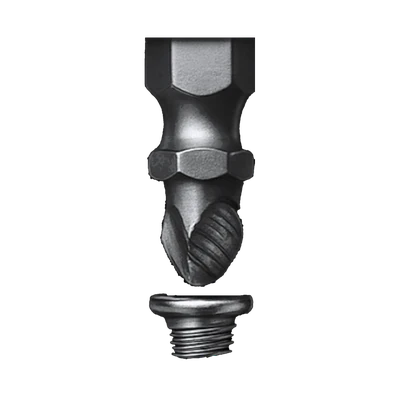
Drill in reverse
Chuck the drilling end. Set the drill to reverse. Press firmly and cut a clean divot, about 1/16–1/8 in deep.
-
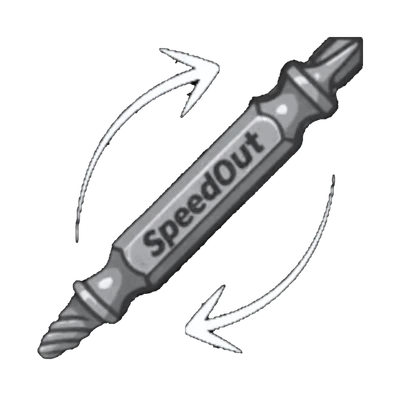
Flip bit may be hot
Take the bit out, flip it end for end and chuck the extracting end. Handle with care — it heats up.
-
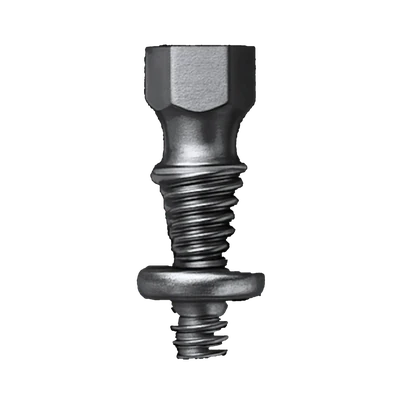
Extract still in reverse
Keep the drill in reverse. Go slow and apply significant pressure. The screw backs right out.
The #1 error
Many people drill forward because boring a hole in reverse goes against habit — and then strip the tool. Use reverse to both drill and extract, and SpeedOut does what you need it to do.
Tutorial
The correct way, start to finish.
Results vary when the tool is used incorrectly, so we made this 30-second tutorial. Spoiler: the key is drilling in reverse.

Troubleshooting
If it's not biting.
Check direction
Both steps run in reverse (counter-clockwise). Drilling forward is the most common cause of a failed extraction.
Go a little deeper
Drill the cone about 1/16 in deeper so the extracting end has more to grip.
Size up
If the bit spins in the cone, try the next size up and repeat from step one.
Slow and firm
Low speed, significant pressure, in line with the screw.
Secure the work
Clamp or hold the work so it can't spin. Wear eye protection. The bit gets hot.
Video library


